Bitcoin's Quantum Era Began Today
Two post-quantum milestones happened on the same day: a quantum-safe transaction confirmed on Bitcoin mainnet, and the first post-quantum signature BIP for Bitcoin.
Two post-quantum milestones happened on the same day: a quantum-safe transaction confirmed on Bitcoin mainnet, and the first post-quantum signature BIP for Bitcoin.

No maths, no jargon. Buy dice, roll them 100 times, write the numbers down correctly, and you have a Bitcoin wallet nobody can guess. Here's exactly how.

After the Coldcard entropy bug, dice are the one seed source you can verify yourself. How many to roll, how to check the result, and the one formatting mistake that silently gives you a different w...
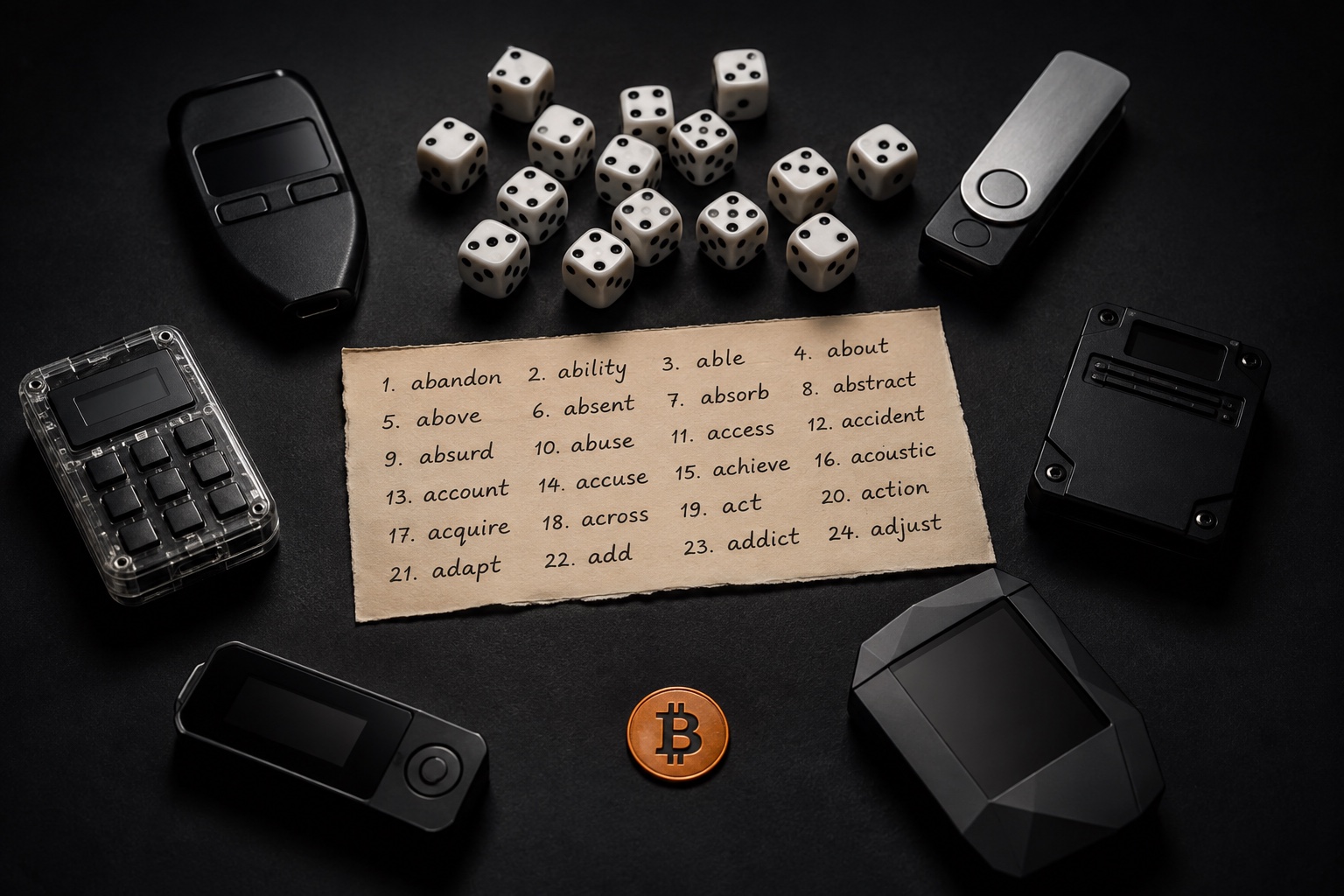
Your hardware wallet does not need a dice mode. BIP-39 is a standard, so you can generate the words anywhere you trust and import them anywhere. Plus why the popular "enter the same rolls into two ...

Why We Use 4 Enumerated Outcomes Instead of Numeric Payout Curves at Lygos

How a Bitcoin fee spike caused Lightning force closures, and upcoming fixes to prevent them.
This post is a recreation of the original article “Discreet Log Contracts Part 2: How They Work [Adaptor Version]” by Nadav Kohen, originally published on Suredbits.com on November 9, 2020. The ori...
This post is a recreation of the original article “Schnorr Applications: Scriptless Scripts” by Nadav Kohen, originally published on Suredbits.com on August 25, 2020. The original company has since...
This post is a recreation of the original article “Discreet Log Contracts Part 4: Security and Trust Model” by Nadav Kohen, originally published on Suredbits.com on September 26, 2019. The original...
This post is a recreation of the original article “Discreet Log Contracts Part 3: Why They Are Great” by Nadav Kohen, originally published on Suredbits.com on September 19, 2019. The original compa...